← Back to library
Last updated March 5, 2026
LatsBiceps
Pull Up (Weighted)
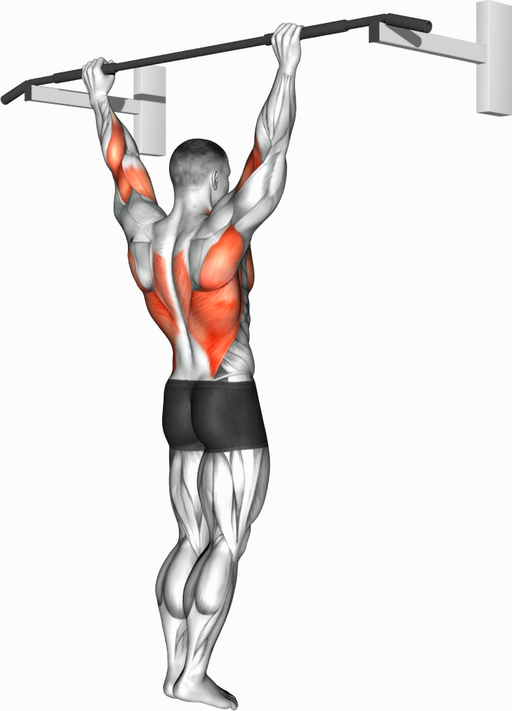
Perform a pull-up with additional weight attached via a belt, vest, or dumbbell between your feet.
Quick facts
- Level
- Advanced
- Mechanic
- Compound
- Force
- Pull
- Type
- Strength
- Injury Risk
- Moderate
- Hypertrophy
- Very High
- Calorie Burn
- Moderate
Muscle focus
Primary and secondary muscle groups targeted by this movement.
Primary
LatsUpper Lats / Teres
Secondary
BicepsBicep (long Head)Rear ShouldersLower TrapsMid TrapsForearm FlexorsDeep Abs / Core
Equipment & setup
What you need and how to position yourself before starting.
Equipment
Pull Up BarWeighted
Movement pattern
Bilateral
Posture
Hanging
Tracking parameters
repsweight
Step-by-step instructions
Follow these cues to master proper technique and stay safe through every rep.
- Step 1Setup
- Attach weight to a dip belt, or wear a weighted vest, or hold a dumbbell between your feet or knees.
- Grip the pull-up bar with an overhand grip at about shoulder width.
- Hang with arms fully extended and engage your shoulder blades.
- Step 2Execution
- Initiate the pull by depressing your shoulder blades and driving elbows down.
- Pull until your chin clears the bar.
- Squeeze your lats hard at the top of the movement.
- Keep your core tight to prevent swinging, especially with added weight.
- Step 3Lowering
- Lower yourself slowly and under control — the eccentric is critical for strength gains.
- Return to a full hang with arms extended before starting the next rep.
- Avoid dropping quickly, as the added weight increases joint stress.
- Step 4Tips
- Only add weight once you can perform 8–10 strict bodyweight pull-ups.
- Start with small weight increments (2.5–5 lbs) and progress gradually.
- A dip belt is the most secure method for adding weight.
- Maintain strict form — avoid kipping or swinging with added weight.
Alternatives & variations
Explore similar movements targeting the same muscles.
_Back__medium_1.png&w=3840&q=75)
-AI_medium_1.png&w=3840&q=75)